Category: For Healthcare Professionals

Case discussions, clinical resources and CEP events for doctors, nurses, speech therapists and other allied health professionals.

  • Latihan Menelan (Dysphagia Therapy) Chin Tuck Against Resistance / CTAR dengan Bola Getah

    Video latihan menelan Chin Tuck Against Resistance / CTAR
    GDM would like to express our heartfelt thanks to Ms Siti Amirah for her help in translation of the Malay Version of the CTAR video.

    Video latihan menelan Chin Tuck Against Resistance / CTAR ini merupakan video Bahasa Melayu pertama yang dihasilkan oleh Singapore Swallowing Specialists.

    Chin Tuck Against Resistance (CTAR) dengan Bola Getah

    Tujuan: Untuk menguatkan otot suprahyoid yang digunakan semasa menelan. Otot-otot suprahyoid penting untuk membuka sfinkter paip makanan atas anda (sfinkter esofagus atas) untuk membolehkan makanan memasuki perut anda.

     Peralatan: 1) Bola getah, 2) jarum pam udara dan pam udara (pilihan) – untuk meningkatkan diameter dan tekanan bola

     Arahan:

     Bahagian 1: CTAR berkekalan (Isometrik)

    • Duduk / berdiri tegak dan tarik bahu ke belakang.  Kekalkan postur ini semasa latihan.
    • Pegang bola di bawah dagu dengan tangan anda dan kekalkan posisi bola sepanjang latihan.
    • Tundukkan dagu anda pada bola sekeras mungkin; dan kekalkan  selama _______ saat.
    • Ulangi _______ set seperti yang disyorkan oleh terapis / patologis pertuturan anda.
    • Rehat selama 1 minit di antara setiap set latihan.

     Bahagian 2: CTAR berulang (Isokinetik)

    • Duduk / berdiri tegak dan tarik bahu ke belakang.  Kekalkan postur ini semasa latihan.
    • Pegang bola di bawah dagu dengan tangan anda dan kekalkan posisi bola sepanjang latihan.
    • Tundukkan dagu anda, sekeras mungkin pada bola;  kemudian angkat dagu.
    • Ulangi langkah di atas untuk ________ kali dan set ________ seperti yang disyorkan oleh terapis / patologis pertuturan anda.
    • Rehat selama 1 minit di antara setiap set latihan.

    Klik pada yang berikut untuk memuat turun (download) arahan latihan:

    CTAR with Rubber Ball Exercise videos are available in the following languages:

    * Click to view CTAR videos in the following languages.

    Chin Tuck Against Resistance (CTAR) exercise is suitable for most patients with swallowing difficulties / dysphagia:

    • dysphagia or swallowing difficulties following strokes,
    • dysphagia following head and neck cancer,
    • dysphagia following Parkinson’s disease,
    • dysphagia due to late effect of radiotherapy e.g. nasopharyngeal cancer
    • etc.
  • Dysphagia Swallowing Therapy – Chin Tuck Against Resistance (CTAR) with Rubber Ball

    Video on CTAR by using the rubber ball

    Singapore Swallowing Specialists (SSS) network has just released their very first swallowing therapy video on Chin Tuck Against Resistance (CTAR) by using the rubber ball (Series 1). We plan to produce more series on CTAR and other swallowing therapy exercises / strategies and translate all the videos to different languages from around the world. SSS hopes to reach out to benefit more people worldwide.

    The following is the CTAR exercise instructions. You may download a PDF copy of these instructions at the bottom of this page.

    For clinicians, you may download the above QR code and print it on your exercise handouts to facilitate clients’ search for the above YouTube Video.

    Chin Tuck Against Resistance (CTAR) with a Rubber Ball

    Purpose: To strengthen the suprahyoid muscles used in swallowing. The suprahyoid muscles are important to open your upper food pipe sphincter (upper esophageal sphincter) to allow food to enter your stomach.

    Equipment: a)Rubber ball, b)Air pump and ball pump needle valve (optional) – to increase diameter and pressure of the ball

    Instructions:

    Part 1: Sustained CTAR (Isometric)

    1. Sit / stand upright and pull your shoulders back. Maintain this posture during the exercise.
    2. Hold the ball under your chin with your hand and keep it in position during the exercise.
    3. Sustain chin tuck against the ball as hard as possible; for the duration of _______ sec.
    4. Repeat _______ sets as recommended by your speech therapist / pathologist.
    5. Rest for 1 minute in between each set of the exercise.

    Part 2: Repetitive CTAR (Isokinetic)

    1. Sit / stand upright and pull your shoulders back. Maintain this posture during the exercise.
    2. Hold the ball under your chin with your hand and keep it in position during the exercise.
    3. Tuck your chin in, as hard as possible against the ball; then lift your chin.
    4. Repeat the above steps for ________ times and ________ sets as recommended by your speech therapist / pathologist.
    5. Rest for 1 minute in between each set of the exercise.

    Click on the following to download the exercise instructions and/or the QR code to access the YouTube video:

    YouTube video URL: https://youtu.be/zBoZSr19zWo

    CTAR with Rubber Ball Exercise videos are available in the following languages:

    * Click to view CTAR videos in the following languages.

    Chin Tuck Against Resistance (CTAR) exercise is suitable for most patients with swallowing difficulties / dysphagia:

    • dysphagia or swallowing difficulties following strokes,
    • dysphagia following head and neck cancer,
    • dysphagia following Parkinson’s disease,
    • dysphagia due to late effect of radiotherapy e.g. nasopharyngeal cancer
    • etc.
  • Swallowing Therapy Tip: How to Speed Up the Thickening of Nutritional Supplement

    Thickening of Resource 2.0 to honey consistency with Nestle Resource ® ThickenUp® Clear

    Speech therapists / pathologists in Singapore and around the world assess swallowing with different fluids or diet consistencies. Once the swallowing assessment is carried out, speech therapists will usually prescribe diet and fluids consistencies that are suitable / safer based on the assessment findings. When thickened fluids are recommended, caregiver training on thickening of fluids to the recommended consistency will usually be performed.

    One of the common challenges faced by many speech therapists, nurses and caregivers is thickening of nutritional supplement with thickener. I did a search online and found out from the Resource ® ThickenUp® Clear official website (https://www.thickenupclear.com/products/resource-thickenup-clear) that it takes milk and oral nutrition supplements up to 15 minutes to reach desired consistency. It is just too time consuming to prepare thickened supplement.

    I might have a way to speed up the thickening of nutritional supplements!

    Many years ago, I did a project for a nutritional company in Singapore on thickening of nutritional supplement using Xanthan gum thickener (the brand that I was using in the project was Nestle Resource ® ThickenUp® Clear). I came up with the following “Manual Shake” method to thicken up the nutritional supplement (** However, this method does not work on fruit juice-based supplement). I did a quick search on google but could not find any and not sure if any speech therapists / any institutions in the world are using this method.

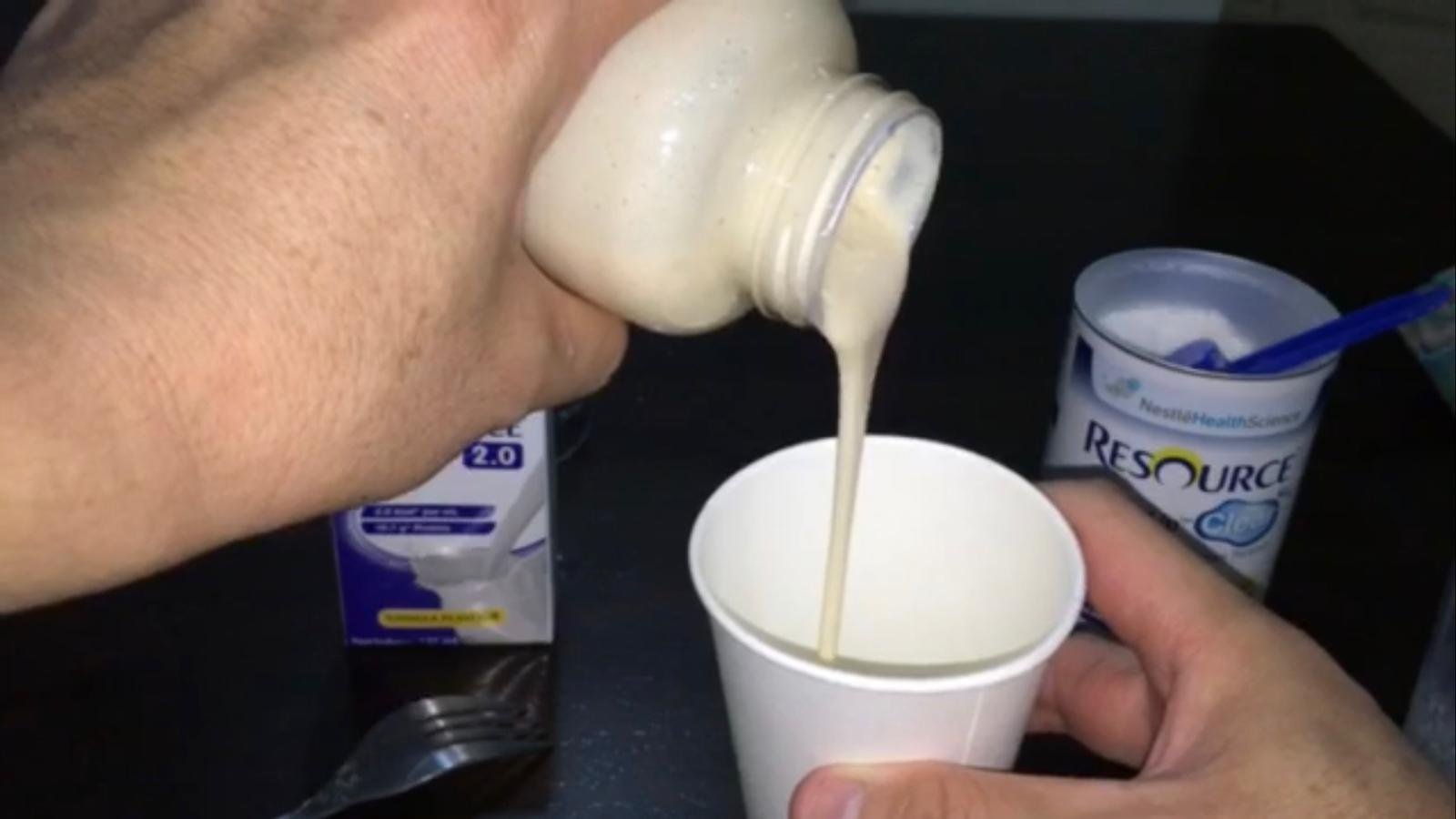
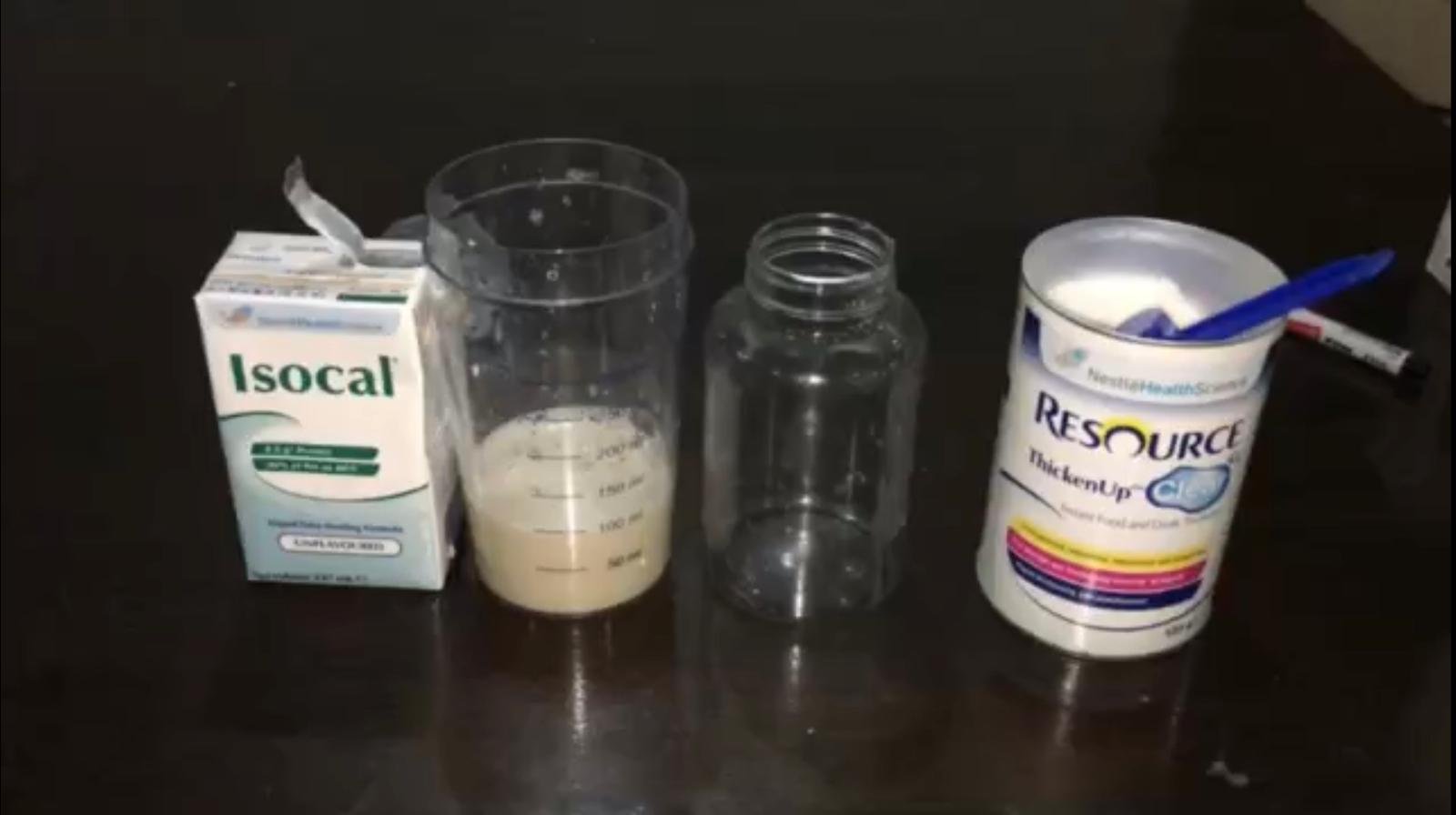
    We have used this method to thicken up supplement in some hospitals and it has successfully reduced the timing of thickened supplement preparation time. With this method, thickening of supplement process can be achieved within 2 minutes. The thickened supplement remains stable even after 10 minutes. In the following videos (taken in 2015), I show the process of thickening of Nestle Resource 2.0 and Nestle Isocal to honey consistency (IDDSI Level 3, moderately thick) and the consistency remains stable after 5 minutes or longer. For Nestle Resource 2.0 and Nestle Isocal, I followed the thickener dosage as listed on Nestle Resource ® ThickenUp® Clear can or dosage chart: https://www.thickenupclear.com/products/resource-thickenup-clear

    You can try to use this ‘Manual Shake’ method to thicken up other nutritional supplement but the thickness might vary. I would suggest trial and error to find out the amount of thickener required for the nutritional supplement(s) that you are using in your hospital. For patient(s) who intend to use this method to thicken up your supplement, please consult your speech therapist/pathologist for advice on the consistency and the amount of thickener powder that might be required.

    As the video was done in 2015, I did not do an IDDSI (International Dysphagia Diet Standardization Initiative) flow test on the texture. We just started following IDDSI standard in Singapore and we are planning to conduct another research on this soon. For speech therapists, or dietitian or healthcare professionals who would like to ensure that the texture meet the IDDSI standard, I would suggest that you perform your own IDDSI flow test and I would be grateful if you could share with me or others. You may email me at info@yoonspeechswallow.sg and I would be most happy to post it on my blog.

    I collaborated with the nurses in St Luke’s Hospital, Singapore to run a project on thickening of nutritional supplement and the project won 2 quality improvement awards and the research poster was presented at the International Forum on Quality and Safety in Healthcare, Taipei in 2019.

    Jose, R., Rendom, J., Yoon, W.L., Abillar, L., Low, P.S., Su, A.Q., (2019 September). New Practices in Thickener Mixing for Effective Care. Poster session presented at the International Forum on Quality and Safety in Healthcare, Taipei.

    Awarded:

    • Agency for Integrated Care (AIC) Quality Improvement Award (2018)
      • St Luke’s Hospital Clinical Quality Improvement Merit Award (2017)

    Here are the steps to thicken up nutritional supplement (non-juice based supplement):

    1. Measure the amount of supplement in a measuring bottle (I would recommend to use a measuring bottle or cup with cover that allows you to shake and serve / drink from)
    2. Mix the amount of thickening powder (Xanthan Gum) required as you stir the supplement.
      • For Nestle Resource 2.0 and Nestle Isocal, I follow the thickener dosage as listed on Nestle Resource ® ThickenUp® Clear can or dosage chart: https://www.thickenupclear.com/products/resource-thickenup-clear
      • Yes, the way I mix it is different as compared to the method recommended by Nestle Resource ® ThickenUp® Clear. Either way of mixing is fine. The reason I mix it the way I did was because it is not easy to ensure that the cup is always dry and pouring in thickener powder into wet cup might cause clump formation.
    3. Cover the bottle / cup and shake it for approximately 2 minutes. *You will feel the gradual thickening up and the slowing of flow of the supplement as you shake the mixture.
    4. Open up the cover and serve / drink. Please ensure safety in drinking the thickened supplement by following the strategies that have been recommended by your speech therapist/pathologist.

    I hope you will find this ‘manual shake’ supplement thickening method useful. Please like and share with your friends and others so that the information will reach to those who might need it.

    I will post more useful information on dysphagia from time to time. Please follow my blog and like my Facebook at https://www.facebook.com/SGSwallowingSpecialists/

    Please feel free to email me at info@yoonspeechswallow.sg if you have any questions.

    Thickening of Resource 2.0 to honey consistency with Nestle Resource ® ThickenUp® Clear
    Thickened Isocal and Resource 2.0 remain stable after more than 5 minutes

    Disclaimer: When choosing food thickeners or nutritional supplements/beverages, please consult with your speech therapist/pathologist or dietitian or health care professional as to what product is appropriate for your individual needs, as consistencies vary between nutritional supplements and manufacturers. As this method is not tested using IDDSI method, health care professionals who would like to adopt this method are encouraged to perform IDDSI flow test to ensure that the thickened supplement(s) of different brands meet the standard.

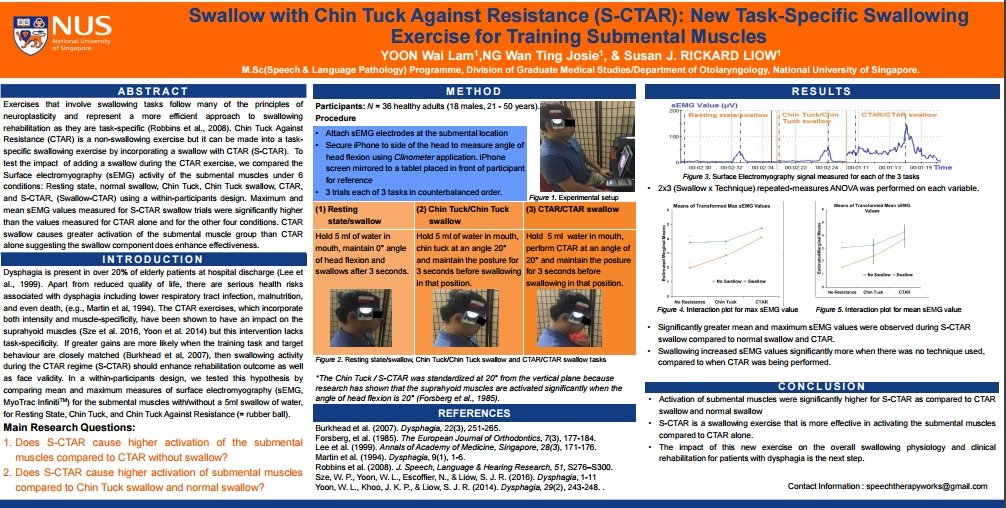
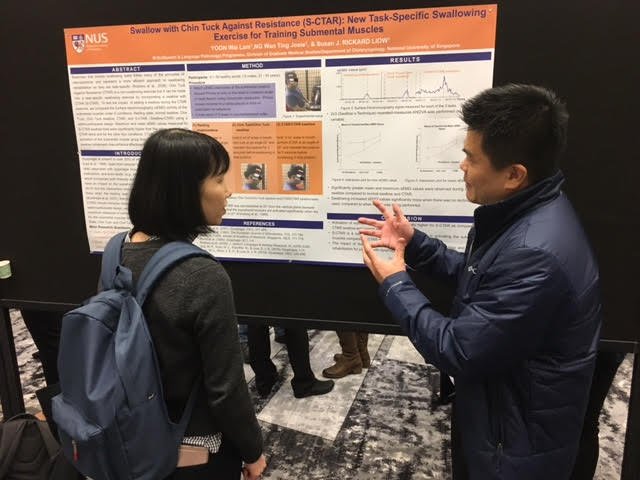
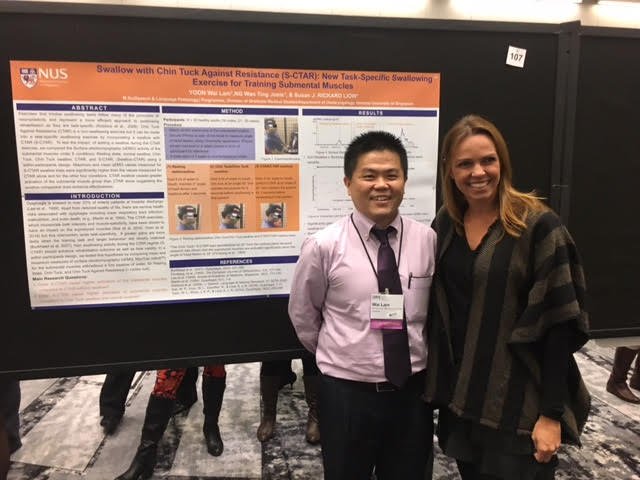
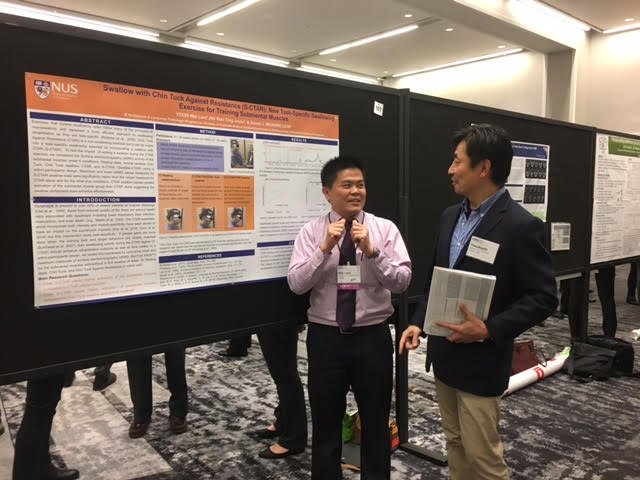
  • Swallow with CTAR (S-CTAR) Poster presented at DRS 2017 @ Portland, Oregon

    Swallow with CTAR (S-CTAR) Poster presented at DRS 2017 @ Portland, Oregon

    S-CTAR Poster

    Life has been so busy since I came back from DRS 2017. Finally, I have some time to put up this blog.

    I was honored to be invited to present a research poster at DRS this year.

    This is probably one of the best years for dysphagia research representation from Singapore as we have 2 oral presentations from Singapore General Hospital and 1 poster presentation (presented by me) from National University of Singapore.

    My poster presentation was on Swallow with Chin Tuck Against Resistance (S-CTAR). 

    Some of the happy moments at DRS:

    • Portland, Oregon is really beautiful and … cold. 
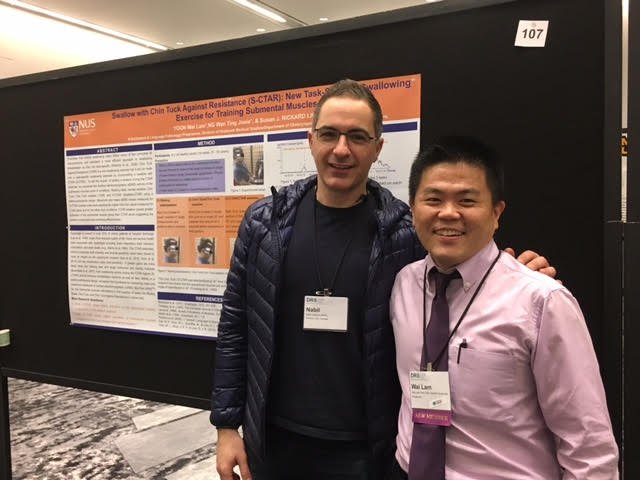
    • I finally got a chance to meet my Facebook pal, Nabil from Canada in person. We share a common interest in dysphagia. Lots of interesting discussion on dysphagia via WhatsApp and Facebook messenger. 
    • I got to meet some old friends and made more new friends from all around the world. 
    • I managed to take a selfie with Dr Reza Shaker!
    • Happy to know that CTAR or Chin Tuck Against Resistance is a well-known and well-liked exercise in USA and Brazil. Brazil Speech Pathologists informed me that they have started research on CTAR! I really hope that clinical study on CTAR will be out soon. 
    • Most Speech-Language Pathologists were excited to know that S-CTAR can be used as a task specific exercise and foresee that they will use it in their dysphagia therapy or management. 
    Portland Oregon
    Portland, Oregon
    Portland
    Portland, Oregon
  • With Dr Shaker
    with Dr Reza Shaker
    Nabil = my FB Pal
    My FB Pal, SLP from Canada – Nabil
    Kotomi - SLP from Japan
    Kotomi Sakai – SLP from Japan
    Brazil SLP
    SLP from Brazil
    Poster presentation
    Demonstrating CTAR to a dentist from Japan
    Demonstrating CTAR & S-CTAR
    Demonstrating CTAR and S-CTAR
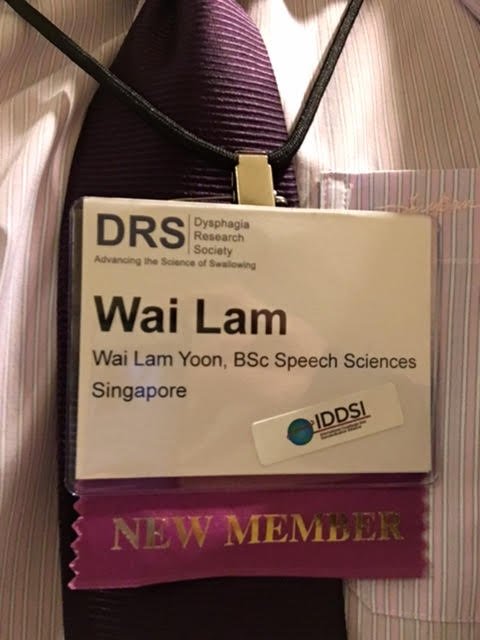
    I am a new DRS Member
    I am a new DRS member.
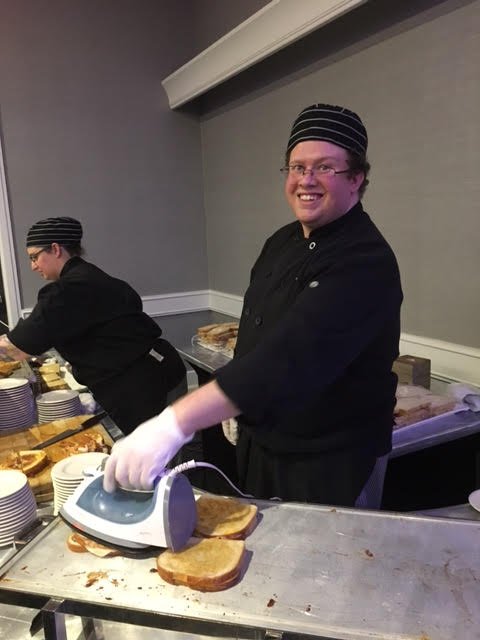
    Ironing sandwich
    This is new to me… Ironing sandwiches?!!!

    I was asked a few interesting questions on CTAR. One of the few interesting question is: are there any devices in the market that you think is good to be used to perform CTAR? I think this is an interesting question as we have seen quite a number of devices (different type of balls, hand held devices etc) being introduced to the market since the first paper on CTAR was published in 2014.

    Click  S-CTAR Poster to download the poster that I presented at DRS 2017.


    To end this post, I would like to congratulate and express my appreciation to all the DRS committees for this successful and enlightening meeting. 

  • What Does Dysphagia from Mechanical Obstruction Sound Like?

    What Does Dysphagia from Mechanical Obstruction Sound Like?

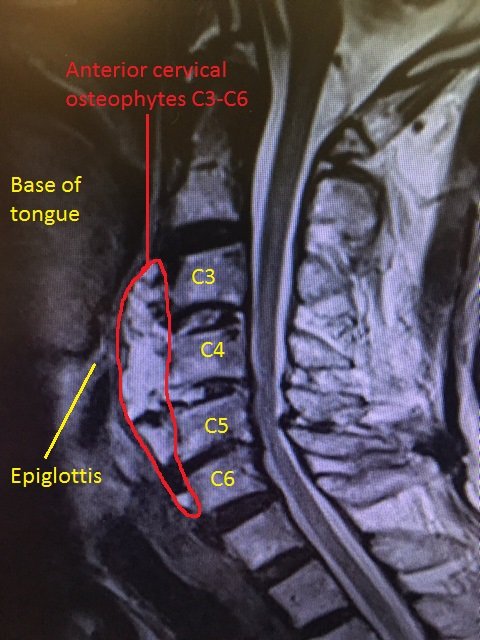
    The following patient presents with dysphagia (swallowing difficulties) secondary to the presence of prominent anterior cervical osteophytes at the level of C3-C6, most prominent at C4.

    Dysphagia symptoms include:

    • Occasional coughing noted when eating solids as well as drinking fluids.
    • Multiple swallows per bolus

    I managed to record the patient’s usual swallowing sound using my iPhone 6s. Could this be the sound of mechanical obstruction?

    osteophytes
    MRI Cervical Spine shows cervical myelopathy. Prominent anterior cervical osteophytes from C3-C6.
    osteophytes label

    The sound of patient swallowing 10ml water recorded using an iPhone 6s. Note multiple swallows & loud squish sound.

  • Worsening dysphagia. How would you manage?

    worsening of dysphagia

    A comprehensive dysphagia (swallowing disorders / difficulties) management is not only limited to diet recommendation, compensatory strategies or rehab exercises. Providing crucial feedback to the medical team is equally important.

    The following case is one case example:

    I was consulted by my speech-language pathologist / therapist colleague regarding a case of worsening dysphagia within days in a rehabilitation hospital. The patient (pt) had a stroke (left MCA infarct) diagnosed 2 weeks ago. According to the medical report from the acute hospital, the pt presents with global aphasia and dense right hemiplegia.

    Day 1:

    Initial assessment revealed mild oropharyngeal dysphagia and global aphasia. Delayed swallowing initiation was suspected. Meal supervision was performed by the ST and pt was started on soft diet and thin fluids.

    Day 2:

    Patient’s swallowing presentation appeared to have worsened. Oral control appeared poorer, and oral residues were noted post swallow. Noted reduction in hyolaryngeal elevation and double swallows per bolus. Coughed on thin fluids. Diet was downgraded to minced diet (IDDSI Level 5) and nectar-thick fluids (IDDSI Level 2) by teaspoon.

    Day 3:

    Staff nurse reported to the ST that pt is coughing on minced diet and nectar thick fluids during breakfast. On ST review, it was noted that patient presents with tongue pumping with significant amount of oral residue post swallow, delayed swallowing initiation, and multiple swallows per bolus. Wet voice was noted post swallow.

    I was asked by my colleague for a second opinion.

    **Before I move on to explain our plan for the case, allow me to list the suggestions by some of the SLPs I spoke to when I presented the case to them.


    1) Most SLPs would want to refer the patient for an objective assessment [Videofluoroscopy (VFS) or Fiberoptic Endoscopic Examination for Swallowing (FEES)].


    2) Some would want to downgrade the diet accordingly to patient’s presentation and observe as so far no other professionals have reported any significant changes. 


    3) Some would want to inform the team doctor regarding the worsening dysphagia, and to rule out the potential underlying medical complications. 

    I asked my SLP colleague the following questions:

    Question 1: What are the possible causes of worsening dysphagia? 

    Answer: Maybe stroke, and maybe other new neurological deficits. 

    Question 2: Why do you think no one else notice any other changes in status except you? 

    Answer: Not sure. That’s why I am worried that I am wrong. 

    My answer: The patient has dense hemiplegia (power = 0) and global aphasia. Unlikely for anyone else to have noticed any changes functionally as both limbs and language functions are 0. 

    Question 3: What would be your recommendation? 

    Answer: What if I am wrong? I don’t dare to ask for a CT scan or MRI as I could be wrong and patient may end up paying for unnecessary procedure and it is not cheap.

    Question 4: What if you are right?

    Answer: Then the medical team can treat the pt earlier. 

    Question 5: Now evaluate the pro and cons the decision “what if you are wrong?” vs “what if you are right?”. 

    Answer: Ok I think it would be better to discuss with team doctor and seek their opinion on this. Will suggest further assessment to rule out new events (such as stroke / neuro issues)

    After discussion with the doctor, patient was sent to the acute hospital for urgent CT scan. The new CT scan showed hemorrhagic conversion on the left MCA infarct (worsening of the stroke).

    In summary, when we encounter rapid progression of dysphagia, perhaps it would be better to speak to the team doctor to find out the cause(s). Objective swallowing assessment should be deferred until patient’s medical status is stabilized.