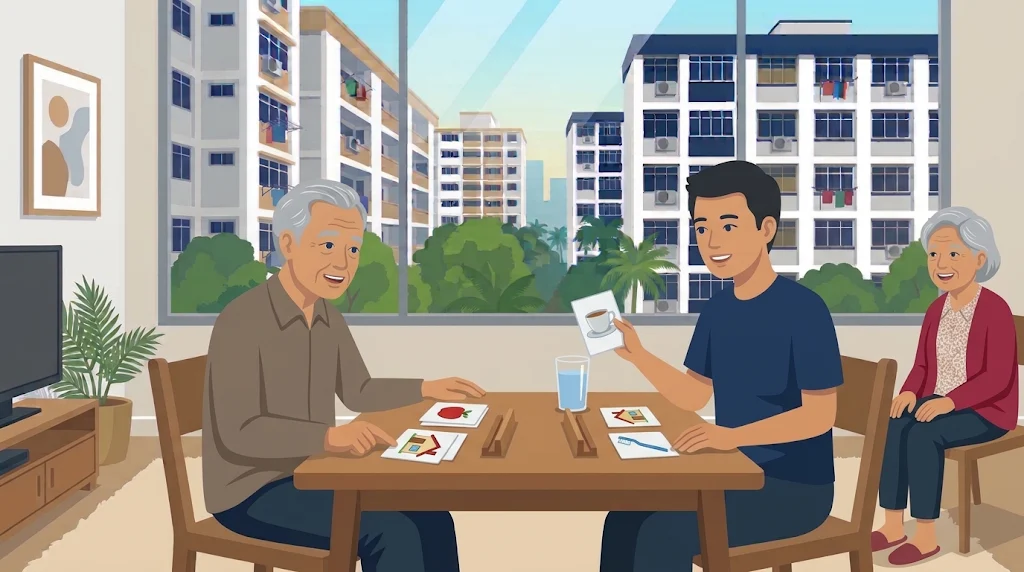
In short: After a stroke, many people have trouble speaking, understanding or swallowing. Speech therapy at home lets recovery continue in familiar surroundings, at real mealtimes and in real conversations, with the family involved.
How does a stroke affect speech and swallowing?
A stroke can damage the parts of the brain that control language, the speech muscles or swallowing. Common problems are:
- Aphasia: difficulty finding words, understanding others, reading or writing (learn more)
- Dysarthria: slurred or weak speech (learn more)
- Apraxia of speech: knowing what to say but struggling to plan the mouth movements (learn more)
- Cognitive-communication difficulties: problems with attention, memory or following conversations (learn more)
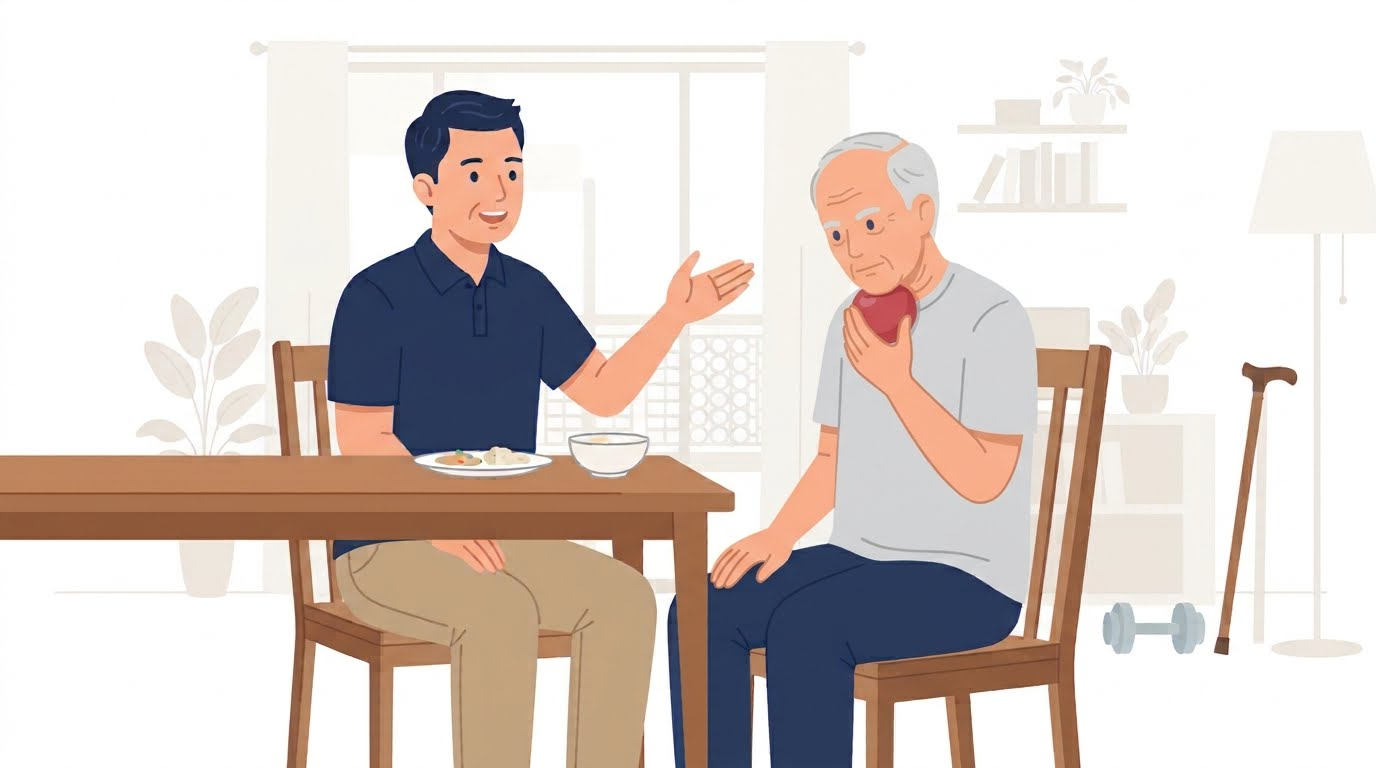
- Dysphagia: coughing or choking when eating or drinking, which raises the risk of chest infections (learn more)
A stroke in the brainstem can cause severe swallowing problems even when speech and thinking are clear. See our guide to swallowing after a brainstem stroke.
Why does therapy at home help after a stroke?
- No tiring trips to a clinic, which matters soon after discharge
- Practice happens at the person’s own table, with their own food and cups
- Family members and helpers learn safe feeding and communication on the spot
- It suits people who are bedbound, frail or tube-fed
What happens at the first home visit?
- A talk with the patient and family about the stroke, current diet and main concerns
- An assessment of speech, language and swallowing
- Advice you can use straight away, such as safer food textures, positioning and communication tips
- A therapy plan with clear goals, shared with the doctor or care team with your consent
What does speech therapy after a stroke involve?
Therapy is planned around the person’s own goals, such as ordering food, talking with grandchildren or eating a family meal safely. Depending on the problem, it can include:
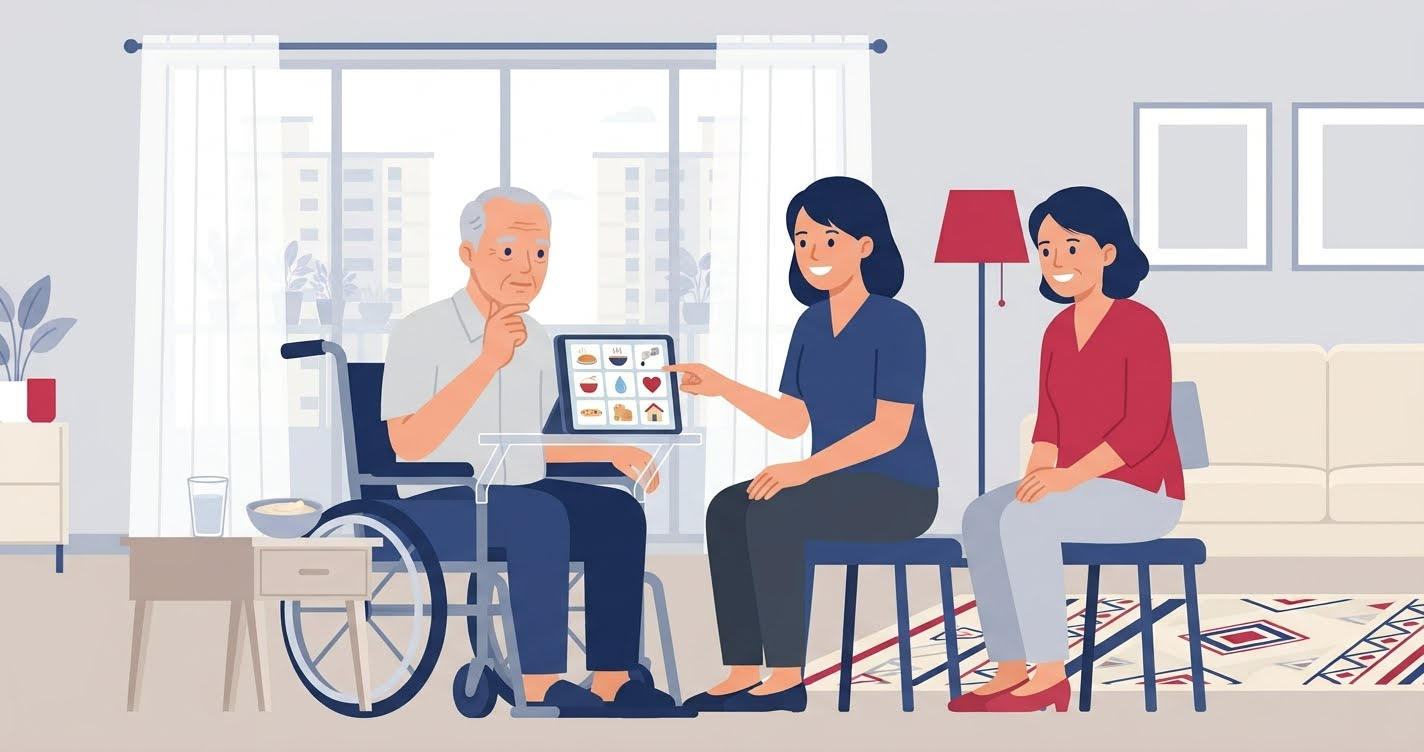
- For language (aphasia): word-finding practice, understanding and conversation tasks, reading and writing work, and simple communication aids for harder moments.
- For speech (dysarthria and apraxia): breath and voice exercises, strategies to slow down and speak more clearly, and practice of useful everyday phrases.
- For swallowing (dysphagia): safer food and drink textures, positioning, swallowing exercises such as CTAR, sEMG biofeedback where helpful, and an instrumental swallow evaluation (FEES) if a closer look is needed.
- For family and helpers: how to support conversation, prepare food and drinks safely, and practise between sessions.
When should speech therapy start after a stroke?
The earlier the better. The fastest gains often come in the first few months after a stroke, so it helps to continue therapy soon after leaving hospital. But it is rarely too late: many people still improve months or years later with the right therapy.
How long does recovery take?
Every stroke is different. Some people recover speech and swallowing within weeks; others improve steadily over many months. Sessions usually last 45 to 60 minutes, and how often they happen depends on the person’s goals and stamina. Practice between sessions, with family or helpers, makes a real difference.
Signs to look out for at home
Coughing during meals, a wet voice after drinking, weight loss, repeated chest infections, or frustration when trying to speak are all reasons to ask for an assessment. You can also try our Swallowing Self-Check.
How we can help
We provide home speech therapy in Singapore for stroke survivors, as well as sessions in nursing homes and online. Sessions are in English, Mandarin, Cantonese and Malay, with some Bahasa Indonesia, and no referral letter is needed.
Common questions
Is it too late for speech therapy years after a stroke?
Not necessarily. Many people keep improving with the right therapy long after a stroke. An assessment shows what can still be improved.
Can someone with a feeding tube after a stroke eat again?
Many people can return to eating and drinking by mouth with swallowing therapy, depending on the stroke and the assessment findings. See our case study of moving from tube feeding to eating.
Do I need a doctor’s referral for speech therapy after a stroke?
No. Families can contact us directly. If you have hospital reports, please share them with us.
Can stroke speech therapy be done in Mandarin or Malay?
Yes. Sessions are available in English, Mandarin, Cantonese and Malay, with some Bahasa Indonesia.
Looking for help for a family member? Learn more about our adult speech therapy in Singapore, at home or online.
Written and clinically reviewed by Yoon Wai Lam, Senior Principal Speech Therapist. Last reviewed: November 2026.