In short: Motor neurone disease (MND), also called ALS, often affects speech and swallowing as it progresses. Speech therapy aims to keep communication and eating as safe, comfortable and independent as possible, and to plan ahead so the person stays in control of decisions. Early referral helps.
How does MND affect speech and swallowing?
MND weakens the muscles used for breathing, speaking and swallowing. Changes often include:
- Slurred, slow or quieter speech (dysarthria), and tiredness when talking
- Coughing or choking with drinks or certain foods, and meals taking longer
- Weight loss because eating becomes tiring
- Difficulty managing saliva, or drooling
- A weaker cough, which makes it harder to clear the throat
How quickly these changes happen varies a lot from person to person.
Why see a speech therapist early?
Seeing a speech therapist soon after diagnosis, even before speech or swallowing change much, gives time to plan ahead while the person can still take part fully in decisions. This can include:
- Voice and message banking: recording the person’s own voice or favourite phrases while speech is still clear, so they can be used later in a communication device.
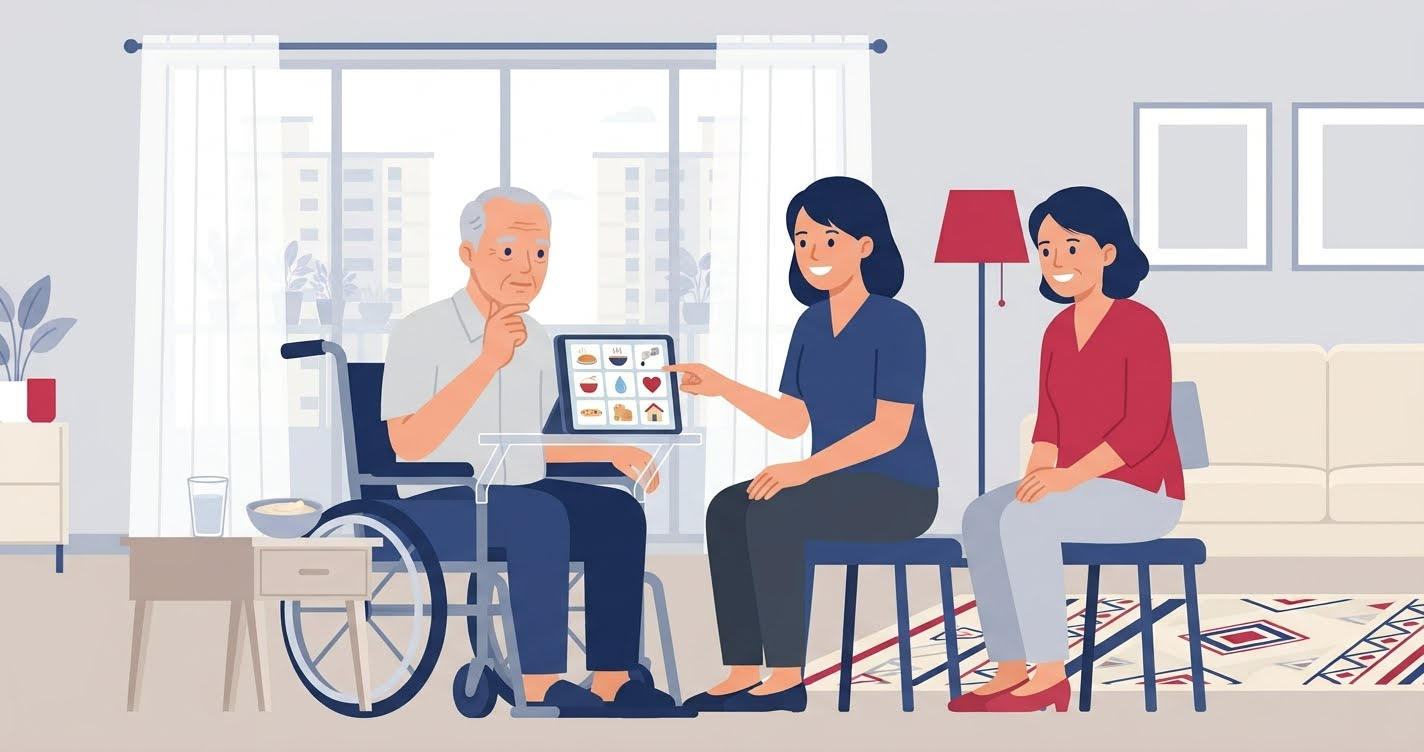
- Communication aids: from simple alphabet boards to tablet apps and eye-gaze devices, introduced before they are urgently needed.
- Planning about feeding tubes: discussing early with the doctor whether and when a feeding tube might help, as this is usually safer while breathing is still strong.
What does therapy for MND involve?
In MND, therapy focuses on keeping eating and communication safe and comfortable for as long as possible, rather than strengthening exercises, which can cause fatigue. It may include:
- Swallowing assessments as things change, sometimes with an instrumental evaluation such as FEES
- Advice on safer food and drink textures, posture and pacing, and smaller, more frequent meals
- Strategies to save energy when talking, and setting up communication aids
- Training family members and helpers in safe feeding and communication
- Working with the neurologist, dietitian and other team members, with your consent
Why therapy at home helps in MND
Travel becomes harder as MND progresses. Seeing the person at home means advice fits their own meals, seating and routine, and the whole family can be involved. We provide home speech therapy in Singapore, and in later stages we also support comfortable eating, drinking and communication.
Common questions
Can speech therapy help with MND?
Yes. Speech therapy cannot stop MND, but it helps people keep communicating and eating as safely and comfortably as possible, and helps families plan ahead.
When should someone with MND see a speech therapist?
Ideally soon after diagnosis, before speech and swallowing change much. This gives time for voice banking, planning communication aids and discussing future feeding options.
Are swallowing exercises helpful in MND?
Strengthening exercises are generally not recommended in MND, as they can cause fatigue. Therapy focuses on safe swallowing strategies, food and drink textures, and energy saving.
Can MND speech and swallowing therapy be done at home in Singapore?
Yes. We visit homes across Singapore and nursing homes, and sessions are available in English, Mandarin, Cantonese and Malay, with some Bahasa Indonesia.
Written and clinically reviewed by Yoon Wai Lam, Senior Principal Speech Therapist. Last reviewed: November 2026.