In short: An adult who could not swallow at all many months after a brainstem stroke, and was fed fully through a PEG tube, progressed over many months of therapy to eating full meals by mouth. Two things made the difference: recognising that frequent tearing was emotional lability rather than depression, and structured swallowing therapy with sEMG biofeedback, checked by FEES before oral feeding began.
This is a composite illustration based on clinical experience. Names, personal details and timelines have been changed or left out so that no individual can be identified. Every person’s recovery is different, and this story is not a promise of any particular result.
Key points
- The patient was an adult who had a brainstem stroke involving the lateral medulla (lateral medullary syndrome, also called Wallenberg syndrome).
- When therapy began, many months after the stroke, they could not start a single swallow and were fed fully through a PEG tube.
- Frequent tearing had been read as depression. It turned out to be emotional lability (pseudobulbar affect), and once this was treated they could take part in therapy.
- Therapy combined swallowing stimulation, sEMG biofeedback and muscle strengthening, with a FEES assessment before oral feeding began.
- Over many months of therapy they progressed to eating full meals by mouth on a modified diet.
Where they started
The patient came to us many months after a brainstem stroke that involved the lateral medulla. This part of the brainstem holds the nerve centres that coordinate swallowing, so a stroke here can leave a person unable to swallow at all. They had been fed through a PEG tube (a feeding tube placed directly into the stomach) since the early stage of their recovery.
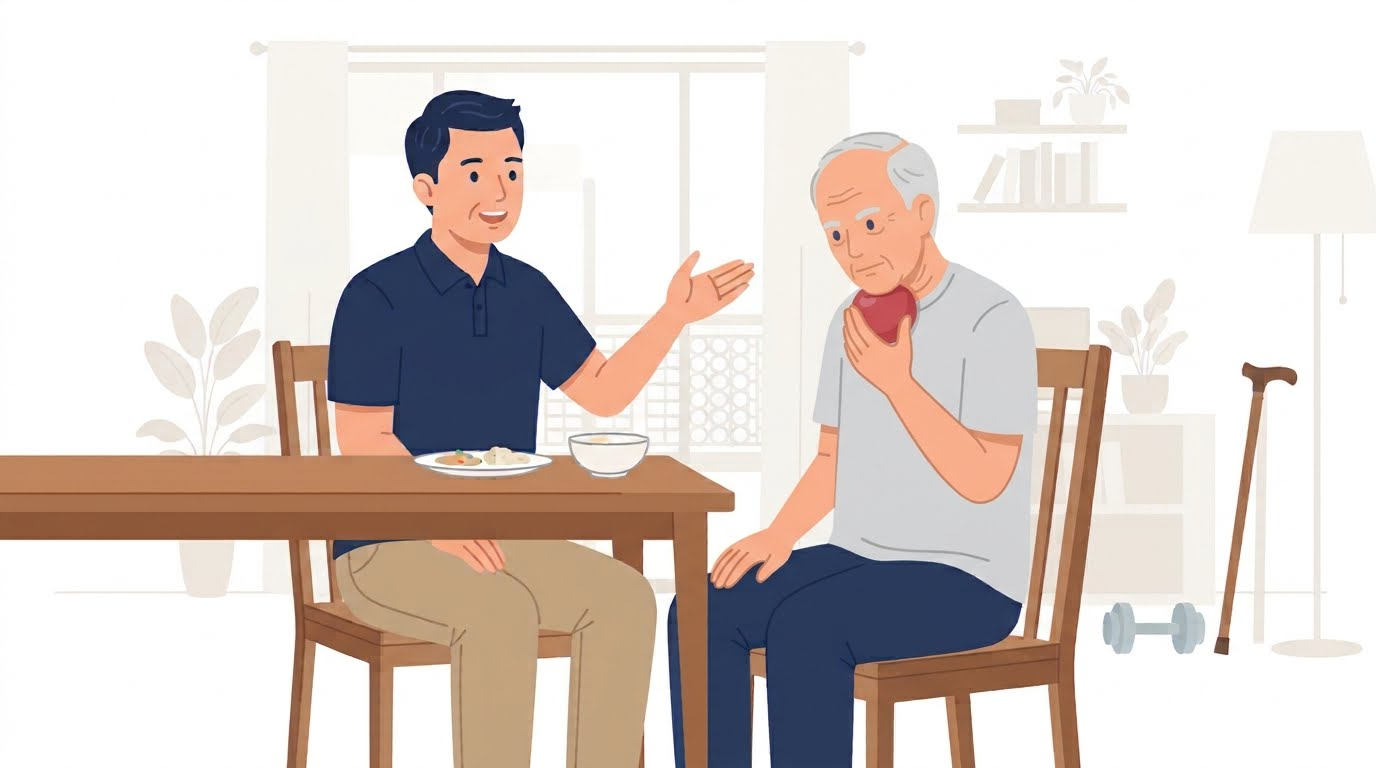
Earlier on, they had been diagnosed with depression. They cried often and had started declining therapy sessions. Part of the reason, I believe, is that no one seemed to understand what they were going through.
Looking again at the tears
In our first sessions I noticed that the tearing did not match the patient’s mood. The tears came suddenly, often without a sad thought behind them, and were hard to stop. This looked to me less like depression and more like emotional lability, also known as pseudobulbar affect (PBA). PBA is a known effect of some brainstem and other neurological injuries: the brain’s control over crying or laughing is disrupted, so the outward emotion does not reflect what the person actually feels inside.
I raised this with the patient’s doctor, who reviewed them and started treatment. The tearing became much better controlled, and the patient could take part fully in therapy sessions.
A lesson for clinicians: when a patient after a brainstem stroke cries often and seems to withdraw, it is worth asking whether this is depression, emotional lability, or both. The answer changes the treatment, and it can change whether the patient is able to engage in rehabilitation at all.
Rebuilding the swallow
At first the patient could not start a single swallow. We began from the ground up:
- Stimulation to wake up the swallowing response.
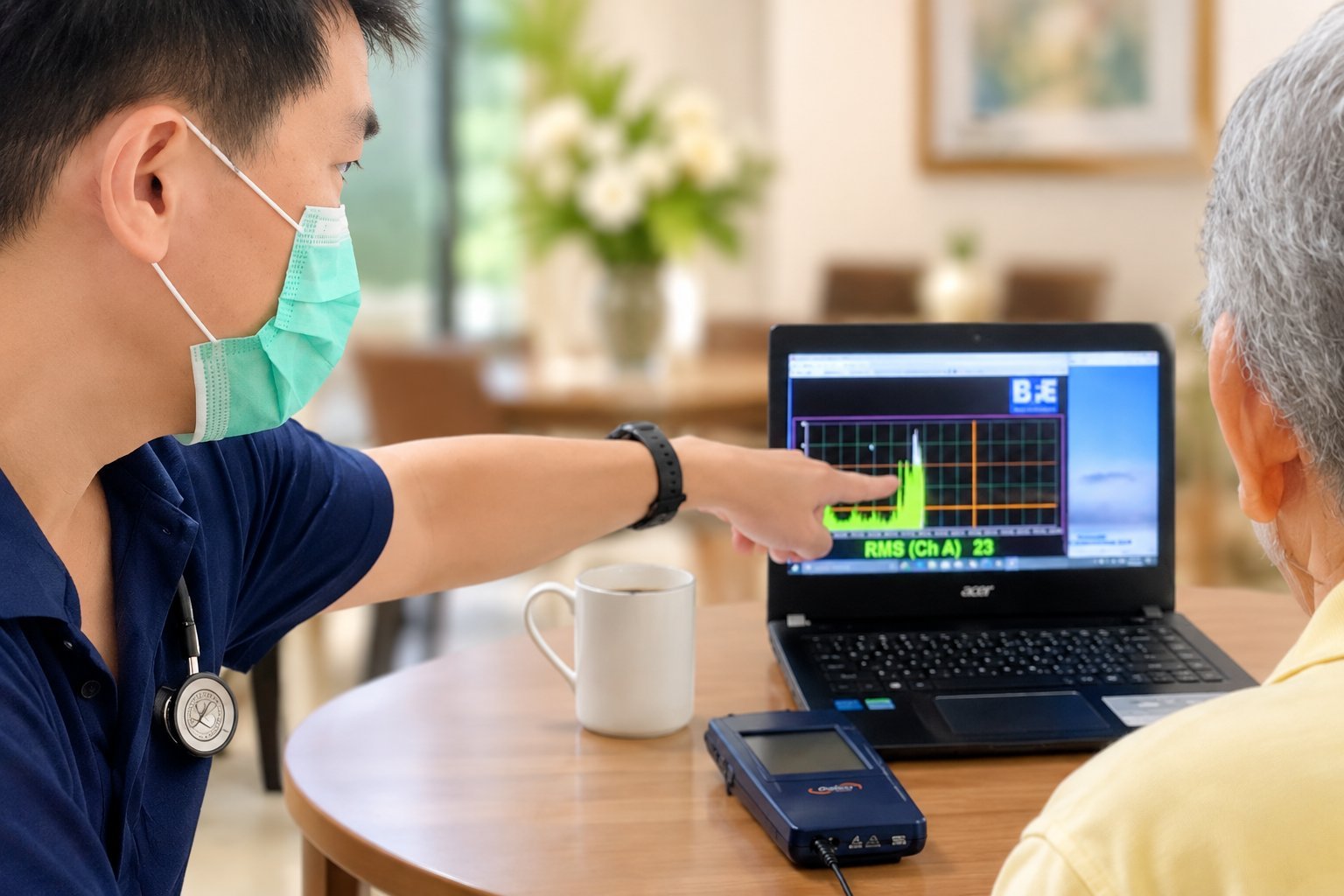
- Surface electromyography (sEMG) biofeedback. Small sensors under the chin show the activity of the swallowing muscles on a screen. This let the patient see each attempt, so they could learn what a stronger, better-timed swallow felt like.
- Strengthening of the swallowing muscles once they could produce a swallow on purpose.
Over the following weeks, they could start a swallow more reliably and with better strength. We then began small, carefully monitored tastes of food and drink, mostly during therapy sessions.
Checking safety with FEES
Once progress was steady, the patient was referred for a FEES (Fibreoptic Endoscopic Evaluation of Swallowing). A thin, flexible camera passed through the nose lets the team see the throat while the person swallows, so we can check whether food and drink are going down the right way.
The FEES showed that they could safely start limited oral feeding. We began transitional feeding: a small amount of puréed food and thickened fluids by mouth, with the PEG still providing most of their nutrition.
Eating safely is not the same as eating a full meal
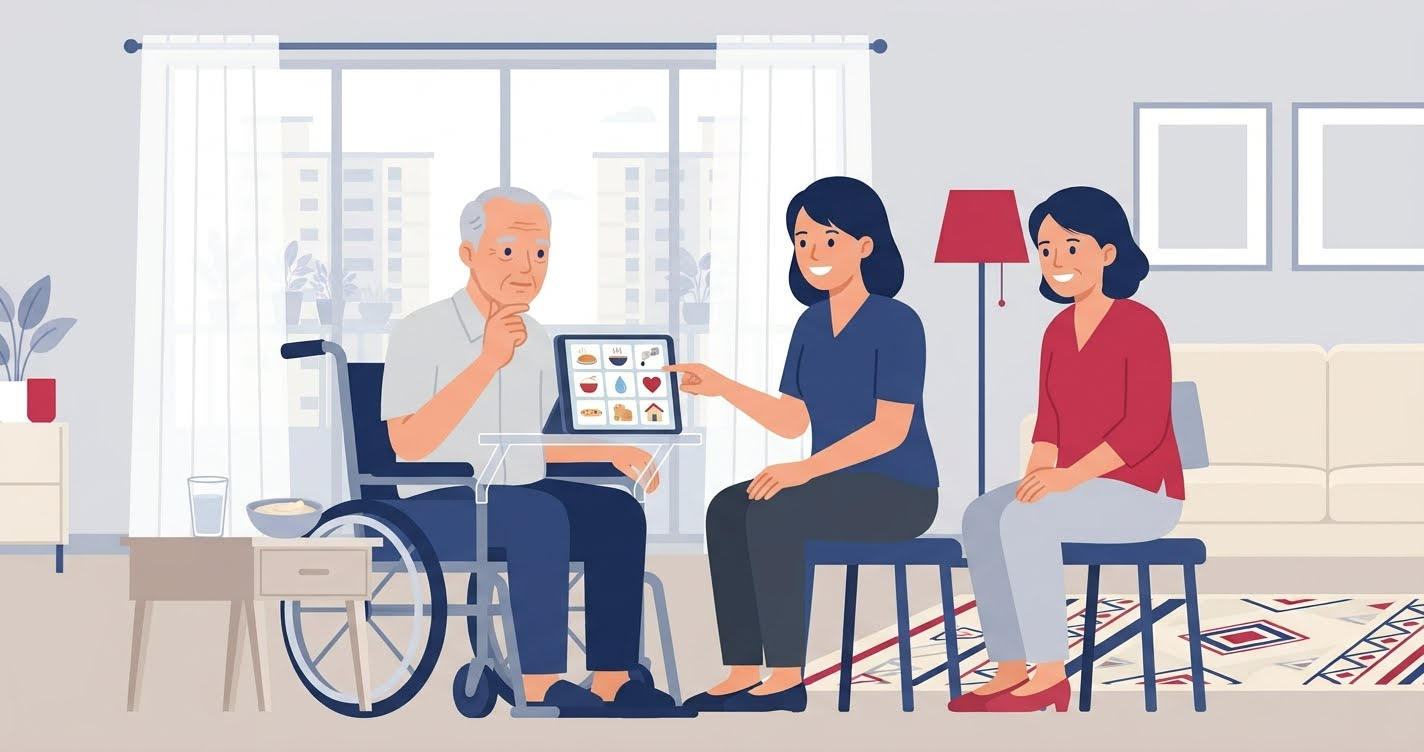
Gradually the patient moved from small amounts to eating a larger share of each meal by mouth. The rest still came through the PEG.
People sometimes ask: if someone can already swallow safely, why can’t they just finish the meal?
It helps to see it from the patient’s side. For most of us, swallowing is automatic; we never think about it. For someone who has lost that function, every single swallow has to be done on purpose, with full concentration and effort. A whole meal might mean a few hundred deliberate swallows in a row. It is like running a marathon for every meal. Building up that endurance takes time, and supplementing through the PEG during this stage is a normal and sensible part of recovery, not a sign that therapy has stalled.
Further on
With continued therapy over many months, the patient progressed to eating full meals by mouth, and their diet was later upgraded to a modified texture suited to their swallow.
A message to fellow speech therapists
Some patients look very severe on paper. A diagnosis such as lateral medullary syndrome, no swallow at all, full tube feeding, many months after the stroke, and a history of declining therapy can all suggest a poor prognosis.
This case is a reminder that the picture can change. With the right assessment, attention to what is getting in the way of therapy (here, unrecognised emotional lability), and consistent, well-structured treatment, improvement can still be possible well beyond the early months after a stroke.
Frequently asked questions
What is lateral medullary syndrome?
Lateral medullary syndrome (Wallenberg syndrome) is caused by a stroke in the side of the medulla, the lowest part of the brainstem. Swallowing difficulty (dysphagia) is common because this area controls the muscles and timing of the swallow.
Can swallowing still improve many months after a stroke?
In some people, yes. Each person is different, and an assessment by a speech therapist is the best way to understand what is possible.
What is sEMG biofeedback in swallowing therapy?
Surface electromyography (sEMG) uses small sensors on the skin under the chin to show swallowing muscle activity on a screen. Seeing each swallow helps the person practise stronger and better-timed swallows.
What is the difference between depression and emotional lability after a stroke?
Depression is a lasting low mood. Emotional lability (pseudobulbar affect) causes sudden crying or laughing that does not match how the person feels. They can look alike, and they can occur together, so it helps to have a doctor review them.
If you or a family member are having difficulty swallowing after a stroke, contact us to arrange an assessment. Related: Complex Dysphagia Management & Second Opinion · Dysphagia guide.