Patient details have been changed to protect privacy.
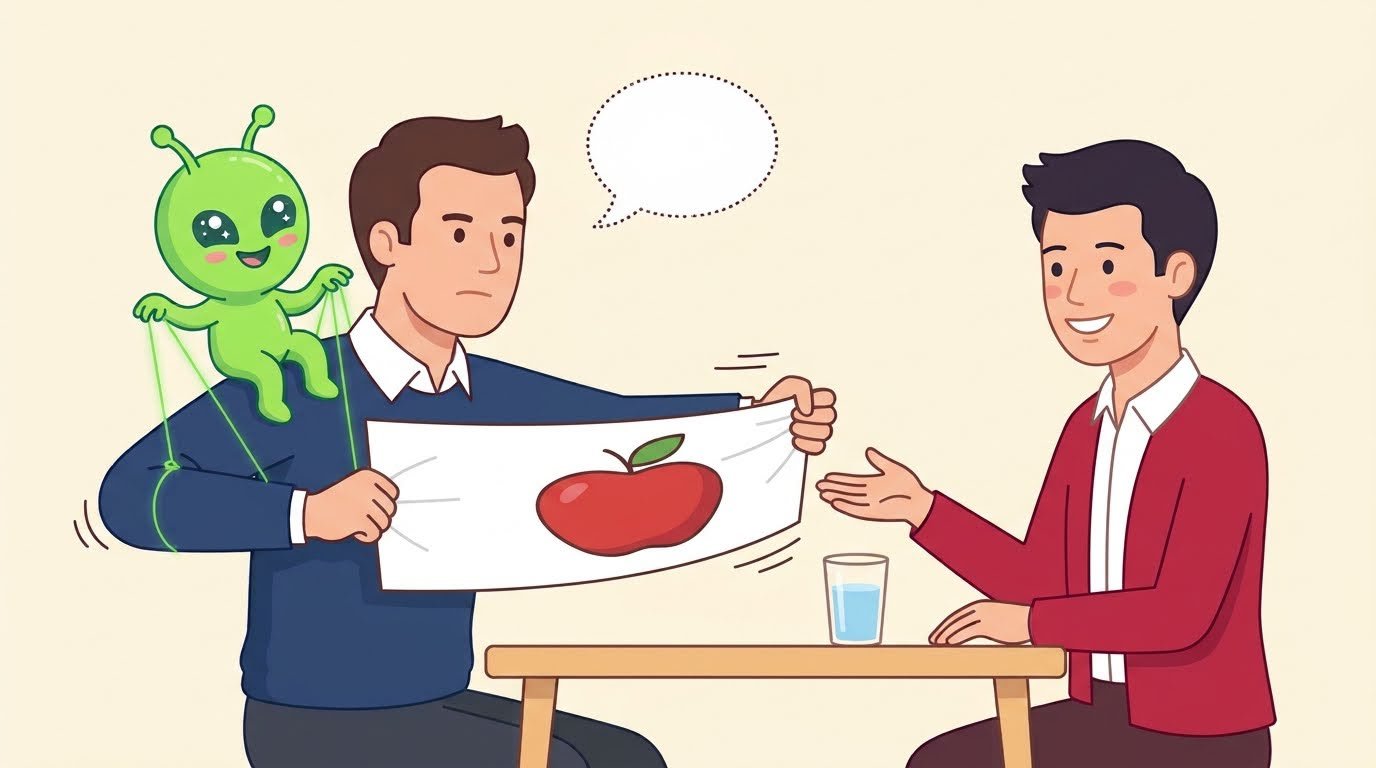
“His right hand gave me the card. His left hand pulled it back.”
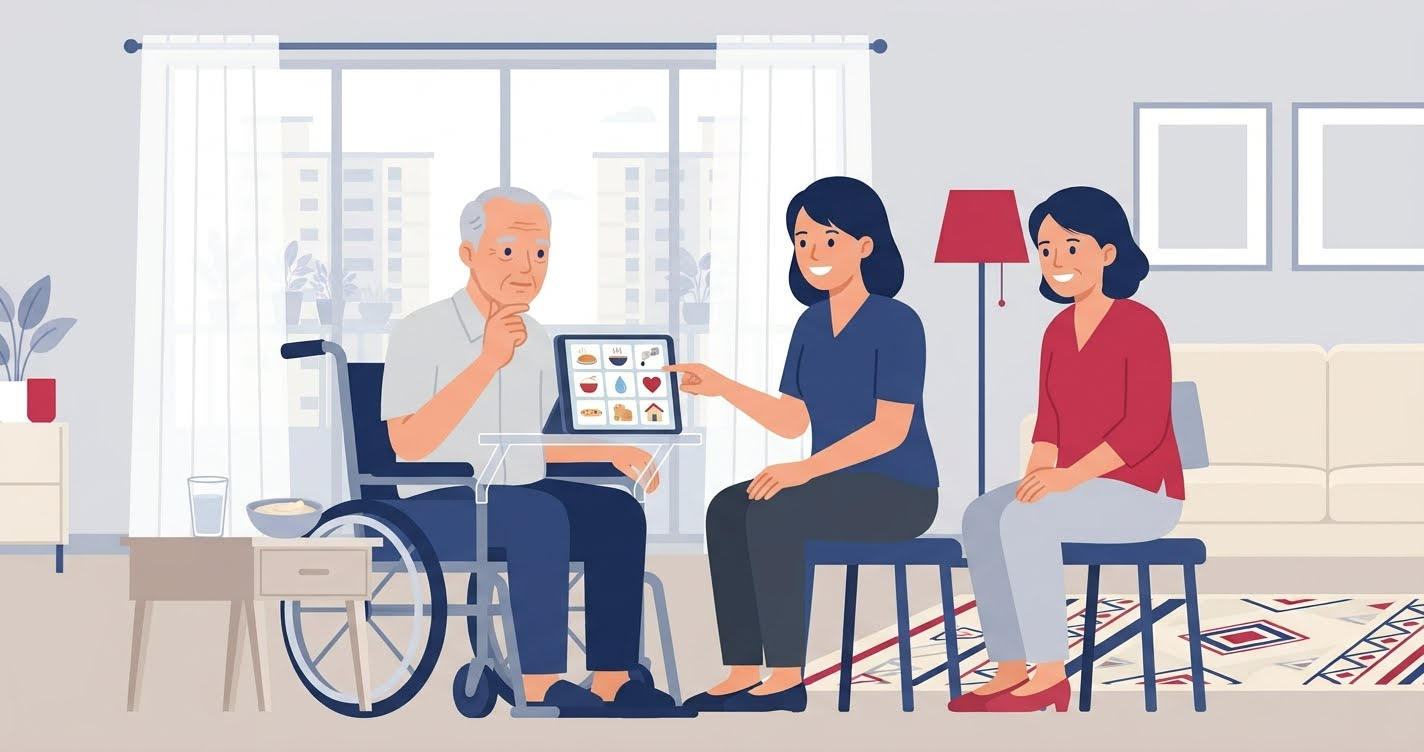
During one of our early therapy sessions, I handed Mr A a set of picture cards and asked him to pass one back to me. His right hand reached out to give me the card. At the same moment, his left hand grabbed the same card and pulled it back towards him. The card was stuck between his two hands, each trying to do the opposite thing.
That was the moment I realised something unusual was going on, and it changed how we understood his whole condition.
What is alien hand syndrome?
Alien hand syndrome is a rare neurological condition in which one hand seems to act on its own, without the person meaning it to. The hand may reach for objects, undo what the other hand is doing, or refuse to let go. Many people describe the hand as feeling as though it belongs to someone else.
One type happens after damage to the corpus callosum, the thick band of nerve fibres that connects the left and right halves of the brain. When this connection is damaged, the two sides of the brain can no longer coordinate properly. The result can be what doctors call intermanual conflict: the two hands working against each other, exactly as I saw with the picture card.
Strokes in the corpus callosum are uncommon, which makes this presentation rarely seen in everyday practice.
Meet Mr A
Mr A was a man in his late thirties who had a stroke involving the corpus callosum. A stroke at this age is already unusual. When he was referred to me, he:
- could not speak at all
- had no voice, not even a whisper or an attempt to mouth words
- was unable to swallow safely and was being fed through a nasogastric (NG) tube
- had difficulty keeping his attention on tasks
- showed some socially inappropriate, disinhibited behaviour
At first, his hands did not seem to be “working together”, but it was not clear why. After the picture card session, I discussed my observations with his doctor. Together, given the corpus callosum involvement, we agreed that his hand behaviour fitted the picture of alien hand syndrome.
Understanding his speech and voice
One important clue came from his cough. When Mr A coughed, he produced a clear, protective cough sound. This told me that his vocal cords were physically able to close and make sound.
Yet when he tried to speak on purpose, nothing came out. There was no voice and no attempt to even mouth words.
This gap between what the body can do automatically (coughing) and what it cannot do on command (speaking or making voice) is a hallmark of apraxia. Apraxia is a problem with planning and starting movements, not weakness of the muscles themselves. Mr A had:
- Apraxia of phonation: difficulty starting voice on purpose, even though the voice box works
- Apraxia of speech: difficulty planning the mouth movements needed to form sounds and words
Recognising this was important. It meant his voice was not “gone”. The brain simply needed help finding its way back to it.
Why would a corpus callosum stroke affect speech?
Damage to the corpus callosum explains the conflict between the hands. On its own, though, it does not usually cause apraxia of speech or apraxia of phonation. These are more often linked to the medial frontal areas of the brain, such as the supplementary motor area, which help plan and start movements, including speech and voice.
These frontal areas sit right next to the corpus callosum and share the same blood supply from the anterior cerebral artery. Mr A’s pattern of difficulties suggests his stroke most likely affected these neighbouring frontal areas as well. One stroke in this region can therefore affect the hands, the voice, speech and even attention and behaviour, all at the same time.
Therapy: swallowing first, voice next
Swallowing
Getting Mr A to swallow safely was a priority. Progress was slow at first. Therapy focused on helping him initiate the swallow and on strengthening the swallowing muscles, together with carefully planned oral trials of food and fluids. Step by step, his swallowing became stronger and safer.
Voice before words
For speech, I made a deliberate choice: target voice first. There is little point practising words if the person cannot yet switch their voice on.
I designed a structured programme focused only on voice production. After about two weeks, Mr A was able to produce a sustained vowel sound “ah”. It was a small sound, but a huge milestone.
From there, we built up gradually:
- Single sounds
- Syllables
- Words, about one month into therapy
- Short phrases
- Sentences
The outcome
Over the course of his rehabilitation:
- His NG tube was removed, and he returned to a regular diet with thin fluids
- He was able to express himself verbally again, in phrases and sentences
- His attention and overall cognition also improved
For a young man who arrived unable to speak, make a sound or swallow, this was a remarkable recovery.
What this case teaches us
- Watch the hands, not just the mouth. A simple picture card task revealed a condition that changed the whole picture. Speech therapists are often well placed to notice these subtle signs during everyday tasks.
- A good cough is a clue. If someone can cough with a clear sound but cannot make voice on purpose, think about apraxia of phonation rather than assuming the vocal cords are damaged.
- Voice comes first. A structured, step-by-step programme that rebuilds voice before words can lay the foundation for speech recovery.
- Teamwork matters. Sharing observations with the medical team helped us reach the right diagnosis and the right plan.
- Recovery is possible. Even with a rare and complex presentation, swallowing and speech can return with targeted therapy.
Need help with speech or swallowing after a stroke?
At Yoon Speech and Swallowing, we support adults with complex speech, voice and swallowing difficulties after stroke and other neurological conditions. If you or a loved one needs help, contact us to arrange an assessment.