In short: Swallowing problems are common in older people, especially after a stroke or with dementia or Parkinson’s disease. Watch for coughing when eating or drinking water, a wet voice, slow eating and weight loss. These can be signs of aspiration, where food or drink goes into the airway. An early swallowing assessment can prevent choking and chest infections.
Why do older people develop swallowing problems?
Muscles weaken with age, and conditions like stroke, dementia and Parkinson’s disease affect the nerves that control swallowing. Some medications cause a dry mouth or drowsiness, which also makes swallowing harder.
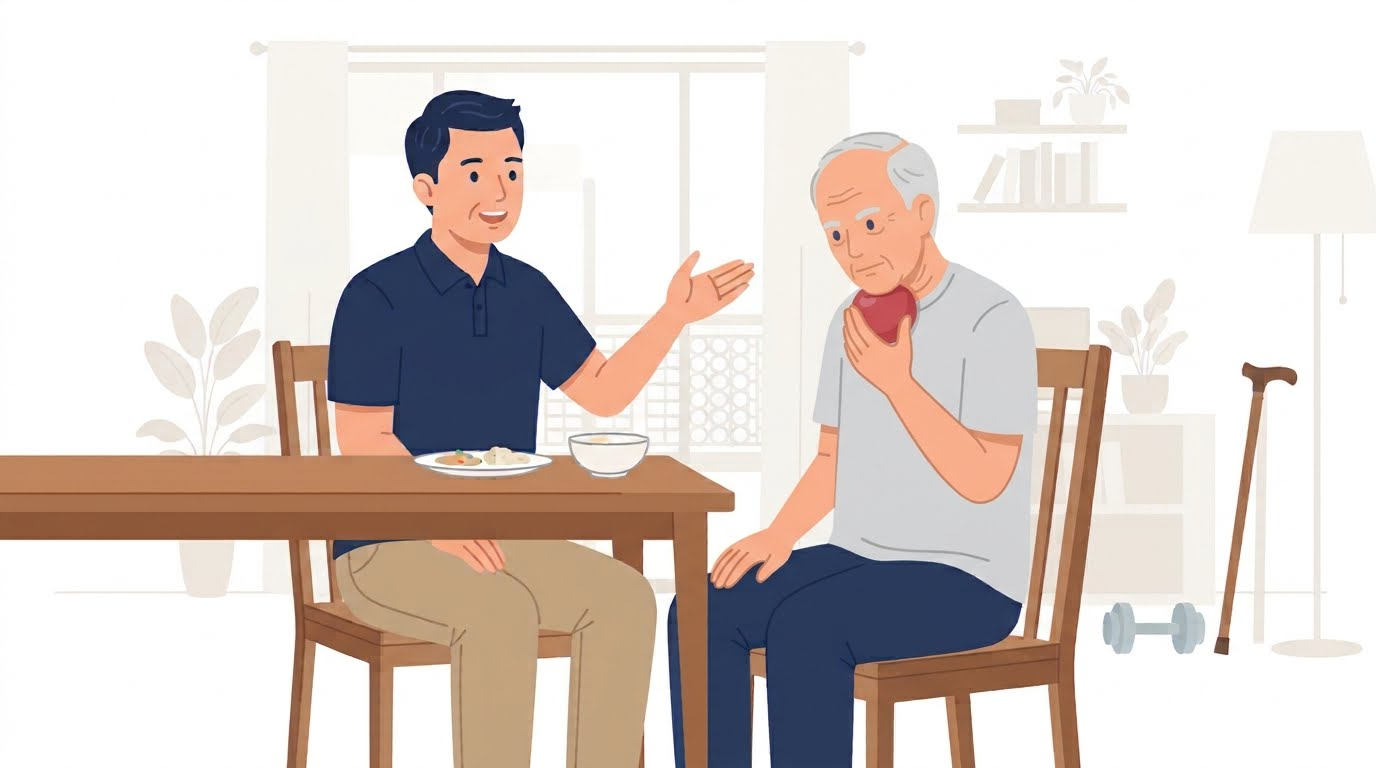
Signs to watch for at meals
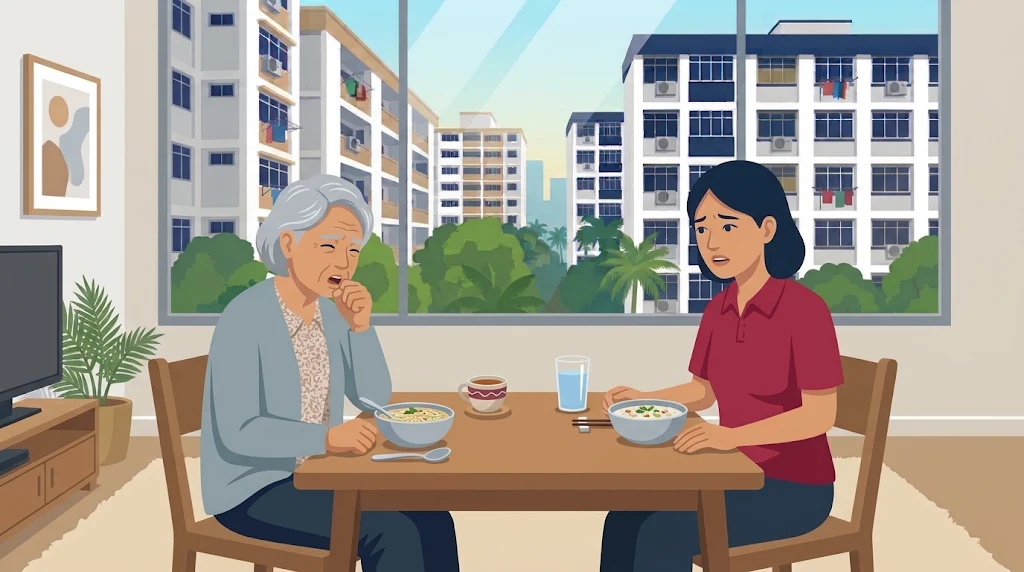
- Coughing or clearing the throat while eating or drinking
- A wet or gurgly voice afterwards
- Holding food in the mouth or taking a long time to finish
- Avoiding certain foods
- Losing weight
- Repeated chest infections or pneumonia
Is coughing when drinking water a sign of a swallowing problem?
It can be. Water and other thin drinks move quickly, so swallowing problems often show up with drinks first. An occasional cough can happen to anyone, but coughing at most drinks, or a wet voice afterwards, suggests some liquid may be going into the airway. This is worth checking with a speech therapist.
What is aspiration, and what are the signs?
Aspiration is when food, drink or saliva goes into the airway instead of the food pipe. Signs include:
- Coughing or choking during or just after eating or drinking
- A wet or gurgly voice after swallowing
- Watery eyes or breathlessness during meals
- Repeated chest infections, or a fever with no clear cause
Some people aspirate without coughing at all. This is called silent aspiration, and it is more common after a stroke and in frail older adults. It may only show up as repeated chest infections, and it can be detected with an instrumental swallow examination such as FEES.
What you can do now
- Sit your parent fully upright to eat and for 30 minutes after
- Offer small mouthfuls, slowly, and avoid rushing
- Stop if there is repeated coughing, and don’t force food
- Keep the mouth clean, including teeth or dentures, as good mouth care lowers the risk of chest infections
- Don’t change food textures or start thickeners without advice, because the wrong texture can make things worse. See our guide to food thickeners.
When to get help
If you notice two or more of these signs, ask for a swallowing assessment. A speech therapist can check how your parent swallows, recommend safe food and drink textures, and teach the family and helper safe feeding.
If there is choking that blocks breathing or a high fever, seek medical help urgently.
How we can help
We assess and treat swallowing problems at home across Singapore and in nursing homes. Try our Swallowing Self-Check, read more about dysphagia, or see how our dysphagia treatment in Singapore works.
Common questions
Is it normal for elderly people to cough when drinking water?
An occasional cough can happen to anyone. Frequent coughing when drinking, especially with a wet voice afterwards, can be a sign of a swallowing problem and should be assessed.
What is silent aspiration?
Silent aspiration is when food, drink or saliva goes into the airway without causing a cough. It is more common after a stroke and in frail older adults, and may only show up as repeated chest infections. FEES can detect it.
Can aspiration cause pneumonia?
Yes. When food, drink or saliva goes into the lungs, it can cause a chest infection called aspiration pneumonia. Good mouth care, upright positioning and a swallowing assessment help lower the risk.
Should I give thickened drinks if my parent coughs when drinking?
Not without an assessment. Thickened drinks help some people but not others, and the wrong thickness can make swallowing harder. A speech therapist can advise whether a thickener is needed and at what level.
Written and clinically reviewed by Yoon Wai Lam, Senior Principal Speech Therapist. Last reviewed: November 2026.