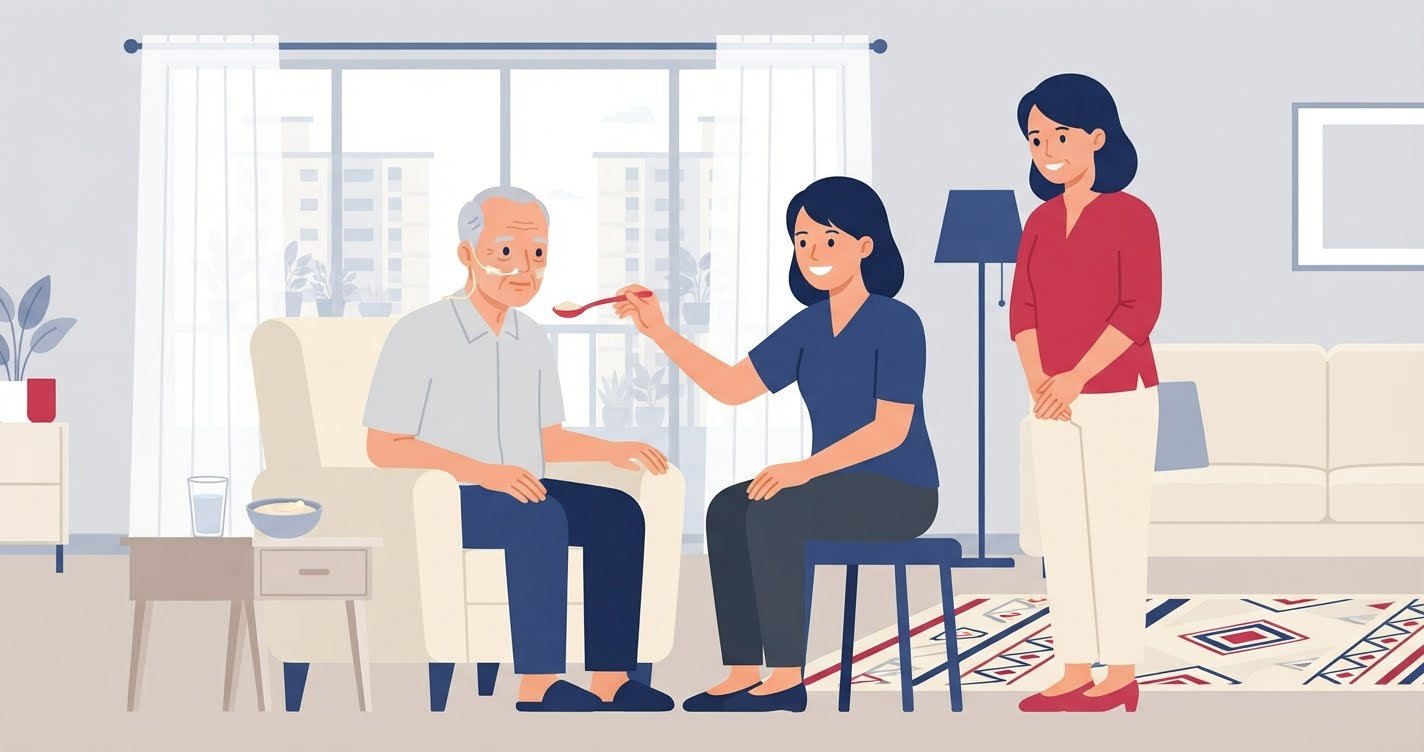
In short: Many people who need a feeding tube (an NG tube or a PEG) after a stroke, illness or cancer treatment can return to eating and drinking by mouth with swallowing therapy, though not everyone can. A speech therapist checks whether swallowing is safe, and works with the doctor and dietitian to reduce tube feeds step by step.
Why was a feeding tube needed?
A feeding tube is used when swallowing is not safe, or when a person cannot eat and drink enough by mouth. The two most common types are:
- NG (nasogastric) tube: passes through the nose into the stomach. It is usually used for a shorter time.
- PEG tube: placed through the tummy wall into the stomach. It is usually used when tube feeding is expected to be needed for longer.
Can my parent eat again after a feeding tube?
Often, yes. Whether a person can return to eating depends on the cause of the swallowing problem, how much the swallow recovers, how alert they are, their breathing and their general health. After a stroke, many people regain enough swallowing to eat again, sometimes months later. See our case study of moving from a PEG tube to full meals.
In progressive conditions such as advanced dementia or motor neurone disease, the aim may be different, such as comfort and enjoyment of small tastes. See our page on palliative care for eating, drinking and communication.
What does tube weaning involve?
- A swallowing assessment, sometimes with an instrumental swallow evaluation (FEES) to see exactly what is happening in the throat.
- Swallowing therapy, such as exercises like CTAR, sEMG biofeedback, and safer swallowing strategies and positions.
- Careful trials of food and drink by mouth, starting with small amounts of the right texture, only when the therapist advises it is safe.
- Step-by-step reduction of tube feeds by the doctor and dietitian as eating and drinking by mouth increase, while weight and hydration are monitored.
- Removal of the tube by the medical team once eating and drinking are safe and enough.
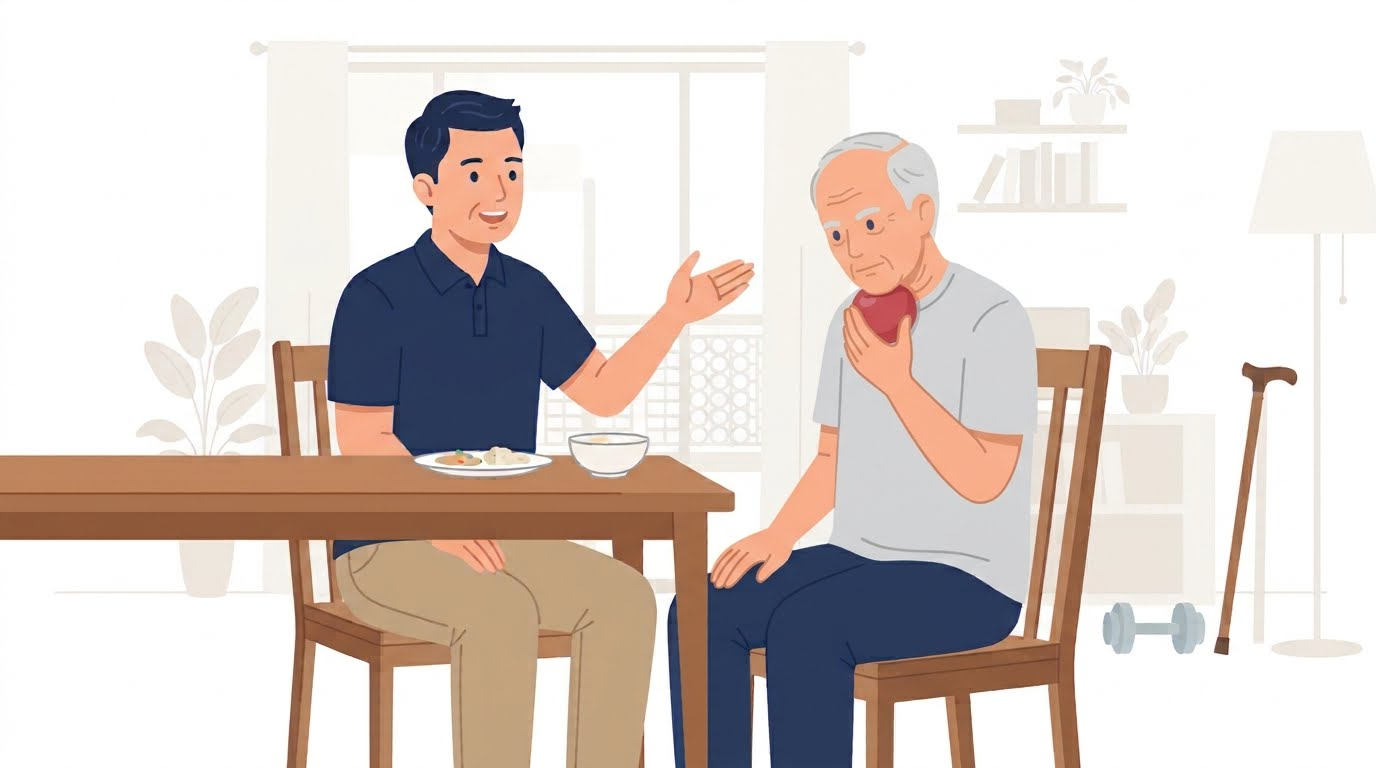
Please do not start giving food or drink by mouth to someone on a feeding tube without a swallowing assessment. If the swallow is not safe, this can lead to choking or chest infections.
Why mouth care still matters with a feeding tube
People who are tube-fed still need regular mouth care. Without food and drink, the mouth can become dry and dirty, and saliva can still go into the airway. A clean mouth lowers the risk of chest infections and helps the person feel more comfortable.
How long does tube weaning take?
It varies. Some people move off the tube within weeks; others need months of therapy. Some may keep the tube for part of their nutrition while enjoying some food by mouth. Your therapist will set clear, realistic goals with you.
How we can help
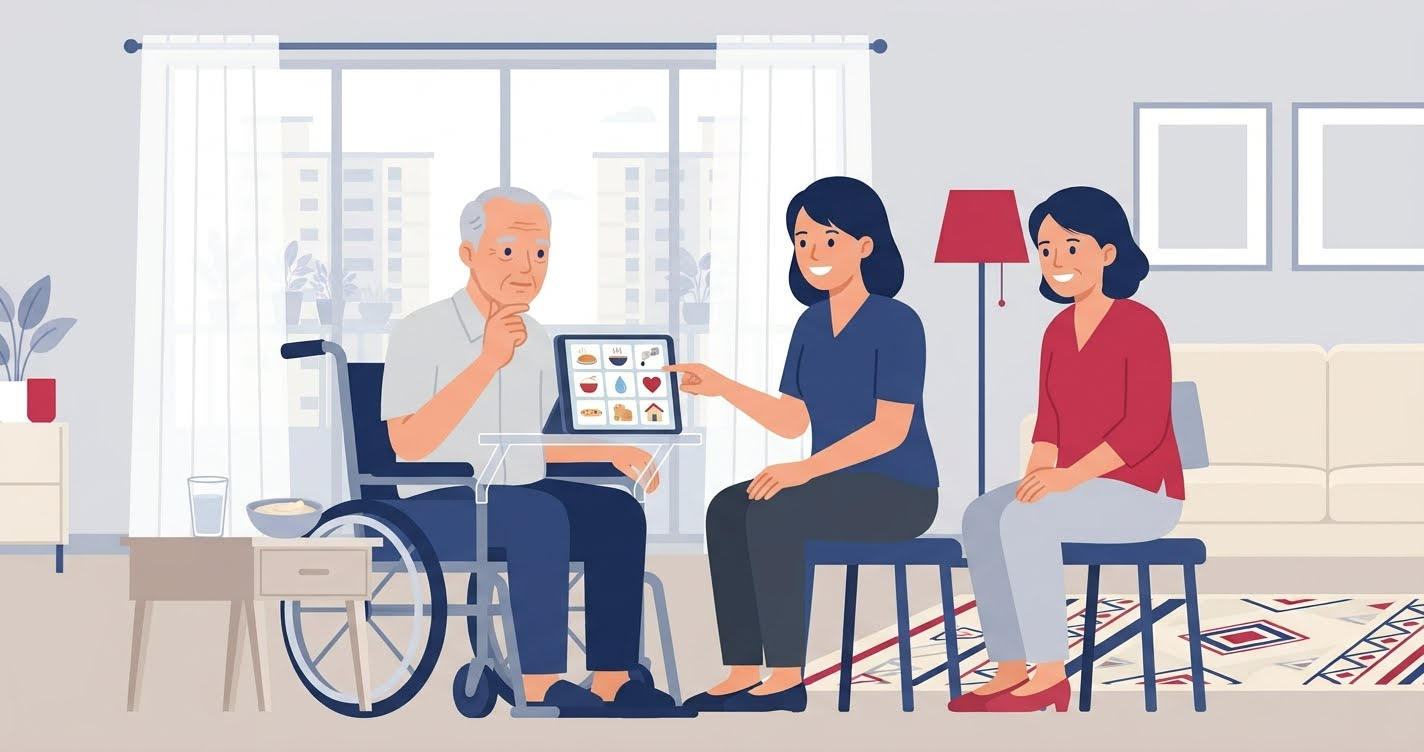
We help people work towards eating again at home across Singapore and in nursing homes, working closely with their doctors and dietitians. Read more about our complex dysphagia management and home speech therapy in Singapore.
Common questions
Can a PEG tube be removed?
Yes. When the doctor agrees that eating and drinking by mouth are safe and enough, the medical team can remove a PEG tube.
Does a feeding tube stop aspiration?
Not completely. Saliva and stomach contents can still go into the airway, so good mouth care and upright positioning are still important.
Can swallowing therapy start while the NG tube is still in?
Yes. Swallowing therapy often begins with the tube in place, so that eating by mouth can be built up safely while nutrition continues through the tube.
Do I need a doctor’s referral for tube weaning therapy?
No. Families can contact us directly. With your consent, we work with the patient’s doctor and dietitian.
Written and clinically reviewed by Yoon Wai Lam, Senior Principal Speech Therapist. Last reviewed: November 2026.